Za vrednost porudžbine preko 7.000 dinara – ISPORUKA JE BESPLATNA NA TERITORIJI GRADA NOVOG SADA!

On the narrow “boot” of Italy, at least the part that protrudes into the Mediterranean, there exists one and only one fully landlocked province. There, in the middle of the boot, sits Umbria, with no coastline to speak of. Named after the ancient Umbri tribes that pre-dated the Roman empire, it doesn’t get a lot of tourist traffic despite possessing the same goegeous agrarian landscapes and picturesque medieval towns that draw so many to Tuscany and other, more popular destinations.
Sometimes referred to as the green heart of Italy, Umbria is known for olive oil, truffles, beans, lentils, and wild game. It has far more forested and uncultivated lands than many neighboring provinces, and it has historically not received much attention from a wine perspective compared to many places in Italy.
Just like everywhere else in this country of wine, Umbria has its own unique set of wines worth exploring, often with interesting stories behind them. Many Italian wines have histories that stretch back hundreds of years. Some are shrouded in mystery. And still others are relatively new narratives that continue to unfold today.
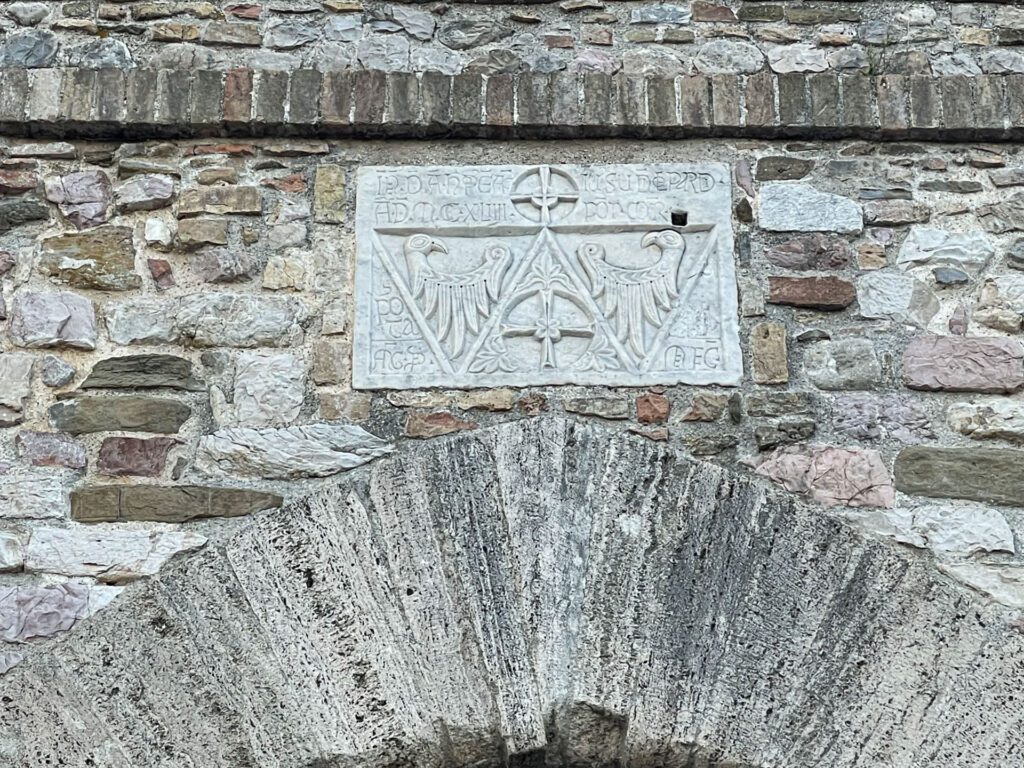
The story of the wine we know today as Montefalco Sagrantino (or Sagrantino di Montefalco depending on your pleasure) is some mix of all these. It has a foggy past, a relatively short modern history, and a future of opportunity.
Every wine producer you speak with in Umbria will tell you that Sagrantino is an ancient grape that has been growing in the region since time immemorial. We do know that grapes have been grown in Umbria for millennia. Whether those grapes were Sagrantino, however, is much less clear.
The first clear references to a wine called Sagrantino (a name thought to be derived from sacre or “sacred”) date to the late 16th Century. The most reliable written records clearly identifying the grape variety of Sagrantino from Umbria, however, are not found until the late 1800s.
What’s more, it is clear that up until the point that the Sagrantino grape nearly went extinct (following the Second World War) Montefalco Sagrantino was always sweet, made in the passito style by drying grapes on wooden racks for weeks following harvest.
In fact, when the DOCG designation for Montefalco Sagrantino was made in 1977 it was only for sweet wines (the dry version got a DOC designation a couple of years later, and was elevated to DOCG in 1992).
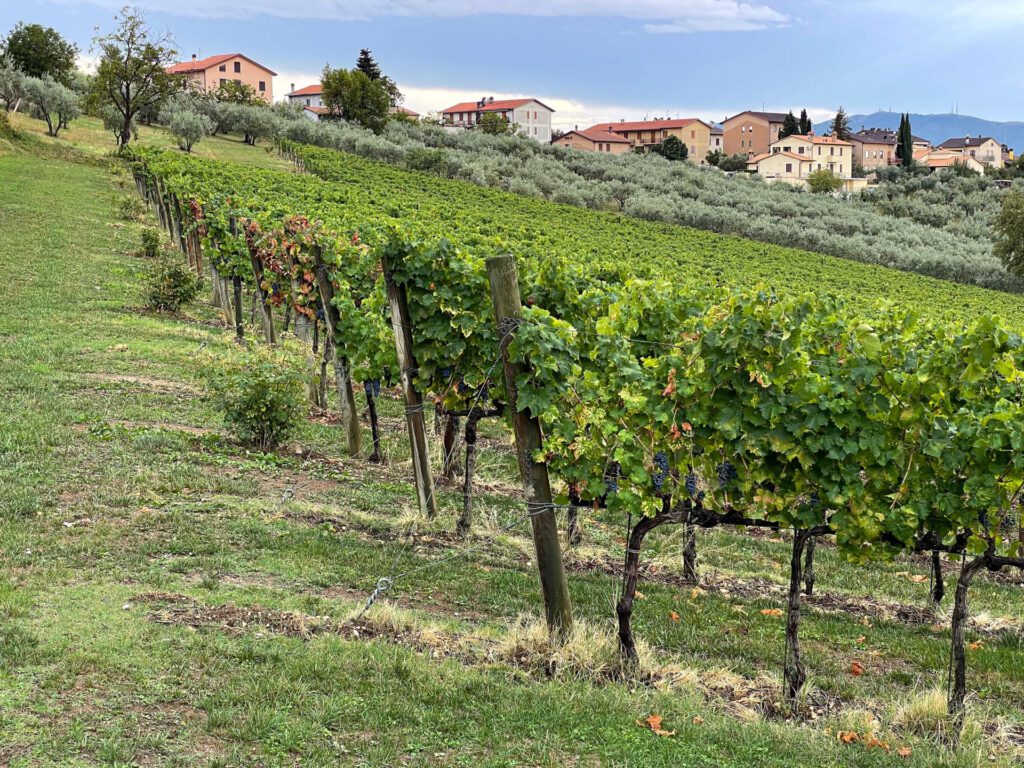
“When the director asked us for samples for the DOCG submission, we had a hard time finding five producers with five vintages each,” recalls Marco Caprai, son of pioneering producer Arnaldo Caprai, the undisputed godfather of Montefalco Sagrantino. When the DOCG was awarded, there were only 163 acres of Sagrantino vineyards in the region.
As recently as 2010 there were less than a dozen producers of Montefalco Sagrantino farming less than 200 acres of vineyards, but the last 15 years have seen a remarkable flowering of producers. Montefalco now includes more than 70 commercial wineries farming almost 1000 acres of Sagrantino. None of them are particularly large in the grand scheme of things, the median production level being around 13,000 cases of wine annually.
While a few stalwart producers continue to make the sweet style of Sagrantino, today 95% of Montefalco Sagrantino consists of dry red wine.
The nearly 60 new producers of Montefalco Sagrantino that have sprung up in the last 15 years have emerged from the region’s existing agricultural society—farmers who decided to take a corner of their existing fields and put in some vines. This phenomenon helps make sense of the somewhat pointillist map of plantings in the Montefalco appellation.
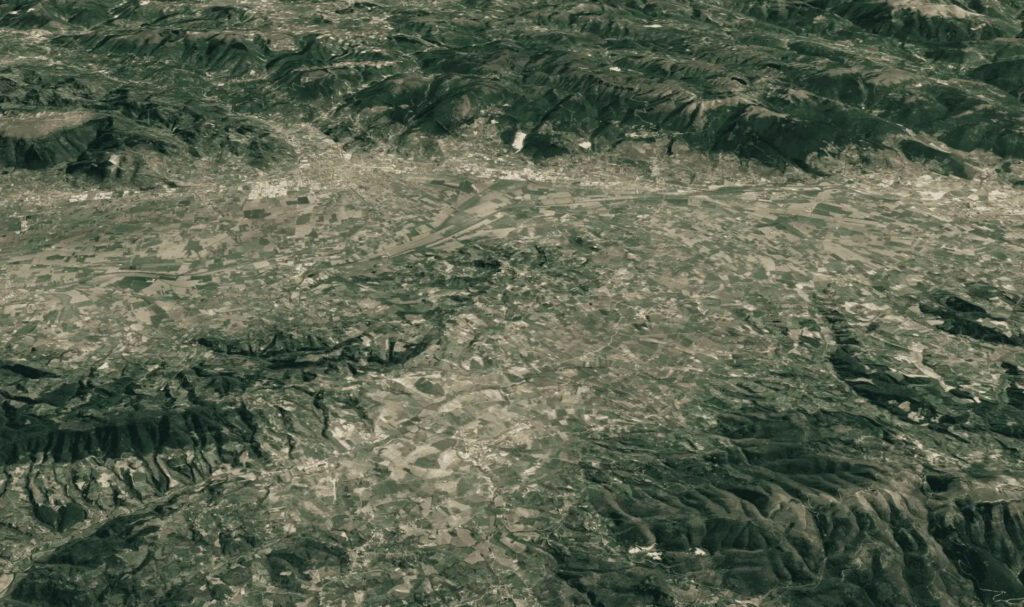
I have not tasted thoroughly enough in the region to be able to say with any confidence that these differences translate into consistently perceivable sensory characteristics.
Few people forget their first taste of a Montefalco Sagrantino, and unfortunately, that’s not necessarily a good thing. The experience is often somewhat brutal. Described by author Ian d’Agata as “Italy’s most tannic red wine, by far,” Sagrantinos can feature punishingly hard tannins that take many years to soften in the bottle. Indeed, tasting newly-released Sagrantino or (heavens forbid) barrel-tasting the most recent vintage of Sagrantino can prove to be a fairly masochistic pastime.
Endowed with thick, dark skins packed with anthocyanins, Sagrantino is a beast of a wine, no two ways about it. These polyphenols, combined with reasonably good acid retention, even when ripe, makes for a wine with the potential for significant age-worthiness.
Put another way, however, as many of us have experienced, the tannins not only allow the wine to age well, they absolutely demand it.
In its youth, Sagrantino is deeply colored and richly flavored with cherry fruit flavors and often floral or dried floral overtones. Picked at what most producers consider ripeness, it makes for an intense, often higher alcohol red, with powerful musculature.
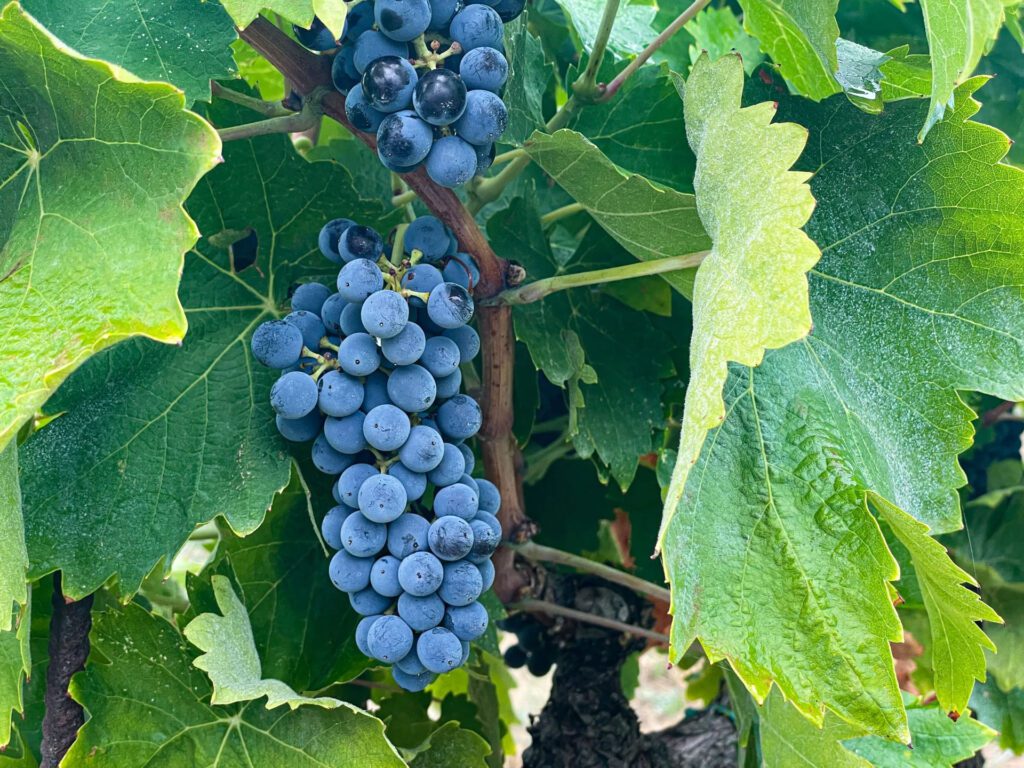
The tannins, just as with other intense grapes such as Tannat or Petite Sirah, need to be carefully managed, but the way that most producers in Montefalco do this is somewhat counter-intuitive: extended maceration.
While leaving fermenting grape juice or the resulting wine in contact with the grape skins pulls out even more of the tannins from the skins and seeds, it also allows them to chain up and get longer. Known as polymerization, this process makes the sensory impact of those tannins less harsh and grating, more smooth and supple.
The tannins of a well-macerated Sagrantino might still hit you like a boulder rolling down a hill, but the boulder will be covered in velvet and it won’t be moving quite so fast when it bowls you over.
Time in the bottle works wonders, and really I don’t recommend drinking Montefalco Sagrantino for at least 5 to 10 years to truly appreciate its charms. For more accessible drinking, there’s Montefalco Rosso, which usually contains more Sangiovese than Sagrantino, and makes for a much more accessible glass of Umbrian wine for those with less patience and perhaps lower budgets.
On the one hand, the commercial acceptance and prominence achieved by Montefalco Sagrantino in the last 20 years can be described as nothing less than astonishing. Going from a handful of producers making wine that was rarely consumed outside of the province to a substantial association of 70 producers with Tre-Bicchieri-Winning wines and some measure of international recognition represents an almost unthinkable amount of progress in such a short time.
On the other hand, we are still clearly at the beginning of Montefalco Sagrantino’s story. Farming techniques are evolving, as are winemaking techniques. And they must continue to do so, both for the exigencies of climate chaos as well as for a continued march towards higher quality.
The top bottlings of Montefalco Sagrantino can be impressive, and with age, deeply rewarding to drink, but as a whole, there is room for not just improvement, but refinement of the wine. Not everyone can have a shoulder of roasted wild boar over lentils to justify a glass of the dark, brooding wine of falcons.
Here are some of my favorite Montefalco Sagrantinos and Rossos from the visit I made as a guest of the Consorzio Tutela Vini Montefalco this past year.